Author: chancechambers

October Goes Down like Whiskey

Full grown Moon Rabbit’s got my bones
restless. Stoplight shadows stain my skin;
the streets wail between the slow autumn
transmissions of summer’s orphan crickets.

The smell of death rattle leaves mingles
with the sweet, hopeful scent of perfume
along a neon sidewalk midway
with its roundabout carousels
and flashing life flight chopper rides.

“Mao?” She smiles, leaning on the bar.
“Not mao enough,” I mumble, I think.
I’m not sure if my lips part enough
for words, breath or just the next shot.

It’s been a long year with rumors
of an early rapture.

Tomorrow there will be a sad accordion
and glockenspiel breaths where pumpkins
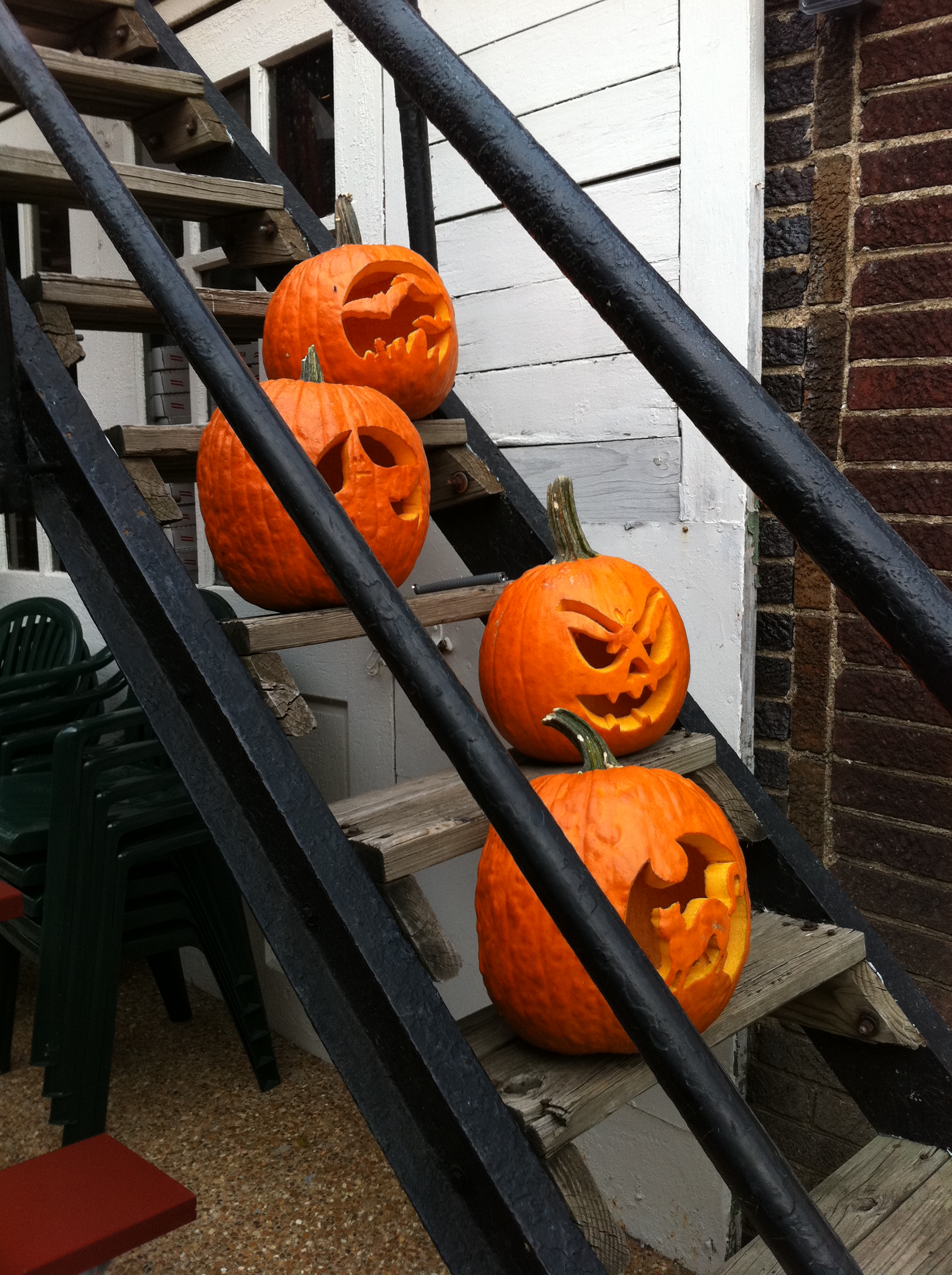
listen on a fire escape, their  jack-o-scenes
as forever as our best moments.

Still, we can celebrate.

Lose your mask for me this holiday
and I’ll shed my yesterday skin.

Drink with me and I’ll tell you everything.

A Loud Sunday in September

9.17.1967

From a cloud of white smoke, a slim, dark-haired Englishman in his mod-rocker uniform of skinny white slacks, white boots and a golden jacket over a ruffle-cuffed white shirt emerged a bit dazed and sporting a new giant cowlick atop his coif. After regaining his bearings, he played through the planned parody of his band’s modus operandi of stage destruction by seizing the acoustic guitar from around the television co-host’s neck and smashing it on the stage, as he had with complete conviction to his own instrument moments earlier. By now, the drummer had left the drum platform and was prostrate on the stage in a theatrical continuation of the bombastic event that had just taken place.

Though these pyrotechnics were a planned part of The Who’s performance of “My Generation” on the Smother Brothers Comedy Hour, the truth that the intensity of the blast was unexpected can be seen in the reaction of those on stage. Roger Daltrey turns away with the posture of someone shielding himself from a grenade blast. When Tommy Smothers returns to the stage wearing the sacrificial prop guitar, he looks a little confused and it’s a moment before he and Pete Townshend are back in synch with their ax-busting moment. Only bassist John Entwistle looks like nothing really happened.

The detonation that was more akin to an industrial accident than performance art could be blamed on Keith Moon’s eternal dedication to the dramatic, reckless moment. After a disappointing blast during rehearsal, he triple-packed the kick drum with extra explosive charges.

In their amp-spearing, eardrum-splitting American television debut, The Who created musical theater that resembled combat, in some ways lending continuity to the programming of the day. The scene on the screen in living rooms from state to state that Sunday night was one of debris, fallen and shell-shocked young men, a post-blast moment that’s likely the beginning of a lifetime of ear-ringing madness. It’s even been said that Keith Moon ended up with cymbal shrapnel in his arm.

***

Dust and smoke started to fall away among trees and grass, not nearly as visible now that the flash was over. The sound of nearby helicopters and other explosions continued behind the silence that enveloped the brush from where no one emerged. Minutes earlier, quiet breaths and subdued whispers had mingled with the rustling of branches and leaves. Then came a pinpoint moment in time when everything changed, when the night ripped open in a hot white flash of yesterday and tomorrow exploding, then contracting, into the microscopic crack in forever that was the now for two souls.

Private First Class Benny Carr. Nineteen years old from Corbin, Kentucky.

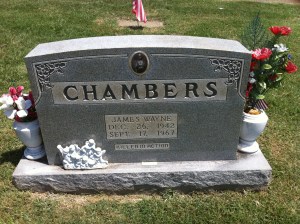
Sergeant James Chambers. Twenty-four years old from Union City, Tennessee.

Both were part of the U. S. Army’s 14th Infantry, 25th Infantry Division stationed in Cu Chi, Vietnam. When the rifle-propelled grenade found them, they were manning a listening post in the Ho Bo Woods. I know almost nothing about Private Carr. As for Sergeant Chambers, I know as much as a son can having never met his father.

Drafted in 1966, my father landed in Vietnam during the spring of ’67. By the time autumn arrived, he knew he was expecting a child. In his letters to my mother and other family, he often mentions the baby. He tells my mom to be careful; asks my grandparents to look after her until he returns. He calls me by name.

When my father did return, it was with an Army escort that Mom released to spend time with his own family instead of remaining for Dad’s funeral. I would later find out that, once state-side, he came home via train. As a child I would love trains, even want to be an engineer.

My mother and I actually took a train once to visit family in another state. This was during my childhood railroad phase, so I was nearly euphoric when we boarded. Our journey took a dark turn, however, when I somehow managed to injure my finger on the metal arm of my seat. It was an upsetting few moments, but I was okay after a porter patched me up with a Band-Aid.

That’s what I remember most about the train.

***

My thoughts started to settle and my body relaxed as I sipped the whiskey sour. It was my last night in Saigon and I was toasting a solitary farewell on the roof of the Rex Hotel. A band played “The Sound of Silence” while, on the streets below, a thousand motorcycles honked and swerved around buses, cars and pedestrians. I leaned back in my chair, listening to a song first popular when American military officers and journalists filled the bar. Over their drinks they watched the flashes of distant artillery fire. Over mine, I watched a Filipino band pull off a dead-on rendition of an American pop standard. As I left the bar, a lady with 1980’s spiked hair laughed, got up and invited me to sit next to her girlfriend. I declined, walked out onto a small balcony near the entrance of the restaurant and looked down at the calliope street scene.

I breathed in the air of a city whose name invites ghosts for so many. Sometimes I think that maybe the souls of those who have gone before us return to the place they died. If that’s the case, my father might have been on that balcony, listening with me to the streets that were anything but silent.

That night in Saigon, I didn’t think so much about the September Sunday forty years earlier when my father was in those woods. I didn’t try to construct his and Private Carr’s last moment. Instead, I felt a calm that contrasted sharply with the busy streets and neon lights, the electric sounds of a bustling city. In that moment, I knew peace.

There is a Buddhist belief that a soul wanders among familiar places and people – home, family and friends – for a few days before moving on. With that thought, I imagine my father visiting my mother a few hours after he died, which would have been the night of the same day because of the time difference. Maybe she was watching television, maybe even The Smothers Brothers Comedy Hour. Perhaps my father’s ghost flinched a bit when Moon’s drum exploded. Maybe he noticed that Mom started a little, too, not realizing she did so because the blast, for some reason, reminded her of the sudden, fleeting sharp pains she had felt earlier in the day. I imagine my father shaking his head at the thought that anyone would want to emulate the sights and sounds of war on a stage, in a song, and then smiling because those loud Englishmen tearing up the stage were actually entertaining and it was a pretty good song, before they blew everything the hell up.
Split-Lipped

I wrote this poem not too long after September 11, 2001. It was inspired by the events of that day, the resulting emotions and the world as I experienced it in the aftermath. A trip to California to visit a friend that November has a starring role in the poem. Traveling that soon after was a memorable experience with the armed soldiers in airports and all the heightened security. As usual, I’m a little late with my tribute, but here’s remembering all the loved ones lost that day and their families. Also, may we honor them by striving for peace, tolerance and understanding so that one day such acts of brutality will only exist in history books.

Jungle Love (Asphalt Swamp Version)

Originally recorded by the Steve Miller Band
Words and music by Lonnie Turner and Greg Douglass

Here’s my low-fi living room tribute to one of my favorite songs from the seventies, the Steve Miller Band classic “Jungle Love.” I would like to think of these video projects that have become my latest hobby as the B-movie equivalent of internet cinema, but they’re really just the visual ramblings of a single, forty-three year old with a camera phone.

That said, I humbly submit my latest effort, complete with bad lip-syncing, fingers in shots and a hat that has seen better days. I don’t think I’m ready for my close-up.

Ten Thousand Miles from the Perfume River

The latest in my Frustrated Director with an iPhone series, this video features footage I took with a digital camera during my 2007 trip to Vietnam with Tours of Peace as well as video shot with my phone. The poem in the middle is “Eyeliner.” Special thanks to my friend Karen for the inspiration for those words.

You might want to take some Dramamine before watching this one. There’s some pretty shaky camera work.

In this video:
Belcourt Avenue Musicians (audio only)
Dinner boat Singers, Perfume River, Hue, Vietnam (audio only)
Sandal Maker and Radio, Cu Chi Tunnels, Vietnam (audio only)
Buddhist Nuns, Hue, Vietnam
Gina Lollobrigida
Kurt Vonnegut
Nashville Dragons
Hue, Vietnam Dragons

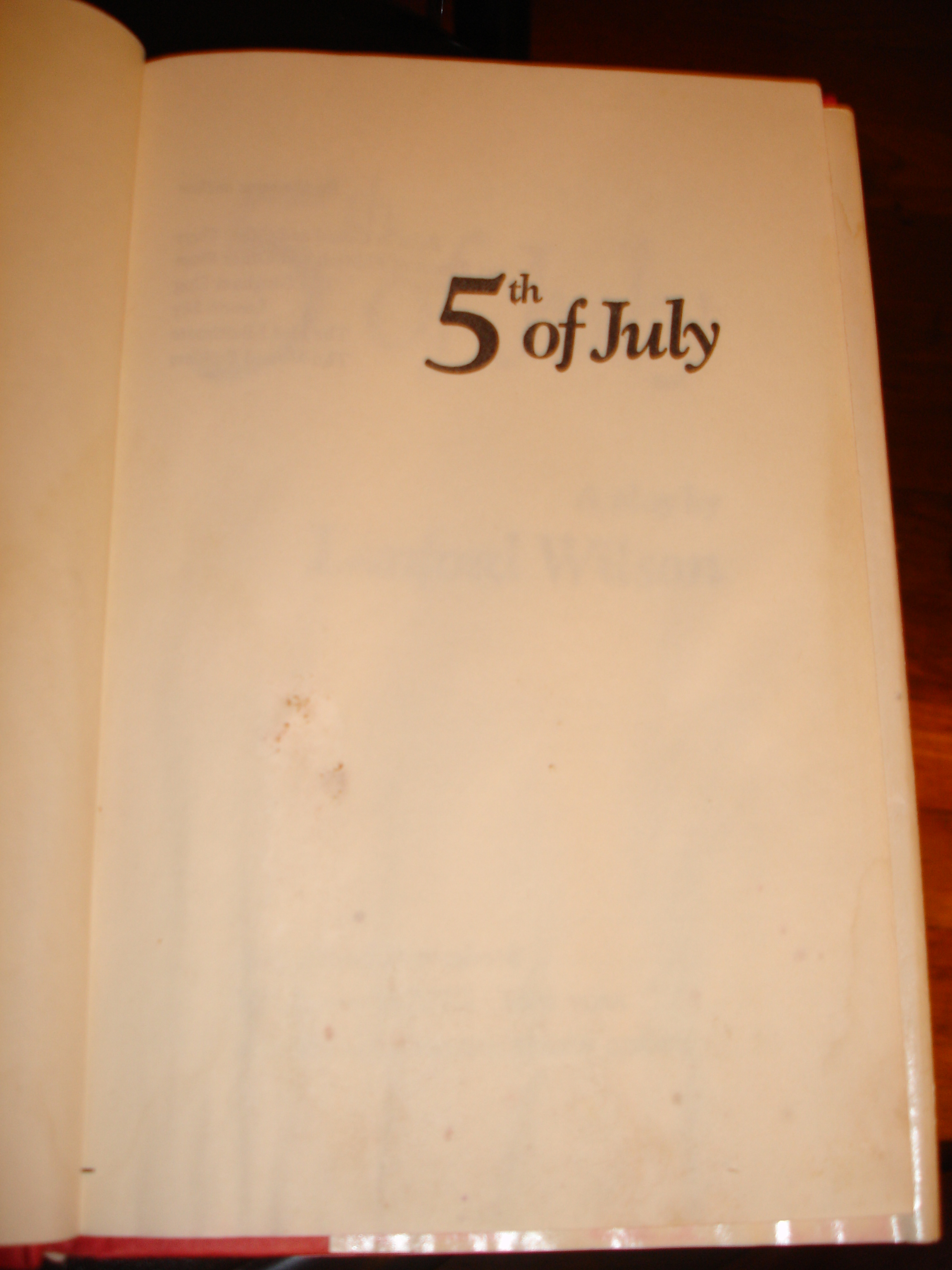
July 5th and the Beautiful Perfection of a Memory Unrealized

It was ’93 or ’94 and her name had the type of alliteration you usually hear in the names of superhero girlfriends. But I was no hero and she wasn’t my girlfriend. Not really.

I had met her at my old college campus student center. She was working in the office and was the one I had to see to get into the swimming pool. I somehow managed to use the facilities there for a few years after graduation. Blond and always wearing a cross necklace, she was borderline stoic with just enough warmth radiating that I was able to find the nerve to chat her up a bit, eventually even ask her out.

Our first real date was July 4th. I joined her and a friend at the top of a hill named Love Circle. There we had, along with about a hundred other people, a perfect view of the city fireworks show. We sat on the grass and watched giant luminous flowers bloom in the summer sky. Around us, children laughed and pointed up. Adults and teenagers held hands and leaned on each other, smiling at the flashes overhead. All of our eyes had taken on that absent stare that comes with being mesmerized by shiny, pretty things.

After the fireworks, her friend left us to ourselves and we drove out to Opryland Hotel. We walked through the conservatory, among the plants, fountains and benches assembled like the space-bound dome forest in Silent Running. But the ecological fate of humankind was the last thing on my mind as I walked next to quite possibly the strongest crush I had in a long time, maybe ever. I can’t remember if I held her hand, but I know I wanted to.

When we grew tired of the air conditioned woodland with sidewalks, we found a large median rock in front of the hotel where we could sit and talk.

“Tell me something I don’t know.” Her request was random and unexpected. I looked down; I looked up at the parking lot. I let out a couple of “hmms” and “uhs.” The warm night air blew against our cheeks as she waited for my answer. I could think of absolutely nothing.

As we sat cross-legged on that boulder and I struggled to come up with some special, secret knowledge that might change her world, midnight passed and the day became July 5th. Our Independence Date would soon end with no epiphanies or revelations, no lyrical tapestry or poetic words.

Then there was the kiss. It happened in the parking lot of my alma mater, after I had been swimming. For some reason she went out to my car with me. There was no romantic setting, no movie moment. I had towel hair and was leaning on my open car door. I don’t know why, but the moment felt right and it just happened.

My crush had become something more. At some point, it occurred to me that this one was different. I didn’t even think about sex when I thought of her. While that might seem like a strange thing to declare, it’s a pretty significant flag to a young man in his twenties. There was definitely something there that was more, that was different than I had felt before.

July unfolded with the slow, deliberate rhythm of a tropical Tennessee summer. Even the soundtrack of the season seemed to mirror the steamy asphalt and wet, thick air with songs like Chris Isaak’s “Wicked Game” in heavy rotation on the radio. It had become a huge hit a couple years earlier because of its placement in the David Lynch film, Wild at Heart. Since then, I heard it at least once a day, usually two or three times. I would come to associate the song with that time, with her.

I didn’t see her much the next few weeks. We talked on the phone. She was at the student center when I went swimming. But we didn’t really go out again.

Then I invited her to come see a band I played with at the time. She showed up with a girlfriend. After our set, while I was packing up my gear, she and her friend came to the stage to give their regards. My spirits were high from the post-show adrenaline and I leaned down to kiss her. She responded by offering a cheek.

That night, I knew it was over. It had never really started. I would find out that she had an ex-boyfriend who was a racecar driver. They were in a custody battle over a dog. I think she went back to him. I was hurt; my crush had been strong.

But our time together was a series of perfect moments, as fleeting as it might have been. One memorable night of disarming and bonding honesty. The first “yes” when I took the leap and asked her out. The car door kiss. All scenes in a short story framed by my anticipation of what could have been, but never at risk of being tarnished by a reality that is often cold and without passion or empathy. The memory is finite and pristine.

I still think of her every July 5th. Sometimes “Wicked Game” evokes the memories, but not as much these days. When I do become nostalgic, it’s for more than the specific scenes and emotions. It’s also for a brief moment in a young man’s life, when he’s at the verge of full throttle adulthood, that he’s able to once again – at least one last time – feel that a summer kiss is enough.

“Wicked Game” written by Chris Isaak; arranged and performed by Viktoriya Yermolyeva.

Stupid Summer

This is a poem I wrote thirteen years ago around this time of year. The details were different, but that was a difficult year for some people, too. The weather that season also vacillated between monsoon-like and scorching. Accompanying my reading are sounds from a night at Ken’s Sushi and a backwards version of Dr. Zhivago’s “Lara’s Theme” as played by a music box owned by my mother.

Photo: “Dancing During the Flood” by C. Cha Ramone

As Long As There Are Fireflies and Children

In My Lai, Vietnam, grandchildren of Ha Thi Quy, a survivor of the 1968 My Lai Massacre, hunt for snails at the ditch where civilians were rounded up and killed.

At times I’m certain that all true innocence has died with one last wince and a single tear as we stood around with our heads down and our hands together in helpless repose, watching the final breath that I can trace back to no less than a half dozen killing moments.

Then the sky breaks out in pink, the firefly shift begins and I remember the little boy who was so happy to wave at me from the backseat of a jeep at a traffic light. His cheeks must have hurt from grinning so much.

I remember the little girl from a village on the other side of the world who only wanted to throw a ball, back and forth, back and forth. We didn’t speak; we just played catch and that was our moment that nobody could steal.

I can hear my name shouted over and over by a friend’s three year old daughter who was very excited about the restaurant fish, especially the orange one.

And I think about the young but scarred heart who thanked me for a gift of blank pages, telling me how she had already written a story in them. I hope those pages end up covered with mostly firefly sunset words, leaving almost no space for the dark room, locked door passages.

Here’s hoping the dark room, locked door passages remain short and seldom for us all.